What would a 24-team College Football Playoff bracket look like?
ESPN released a hypothetical 24‑team College Football Playoff bracket based on the CFP committee’s final rankings from the 2025 season. The graphic shows how the expanded field would be arranged, with teams positioned according to their place in the committee’s final list.
The new format doubles the number of playoff participants from the current 12 to 24, allowing a broader swath of programs to compete for the national title. Teams are paired in the opening round in a way that reflects the committee’s ranking order, so higher‑ranked teams face lower‑ranked opponents. This structure is intended to reward teams that finish the regular season at the top of the standings while still giving lower‑seeded programs a realistic path to the championship.
Expanding the playoff is expected to boost fan interest and generate additional revenue for the sport. More schools will have a legitimate chance to reach the postseason, which can increase ticket sales, television viewership, and sponsorship opportunities. The change also addresses concerns about competitive balance, giving teams from a wider range of conferences a clearer opportunity to compete for the title.
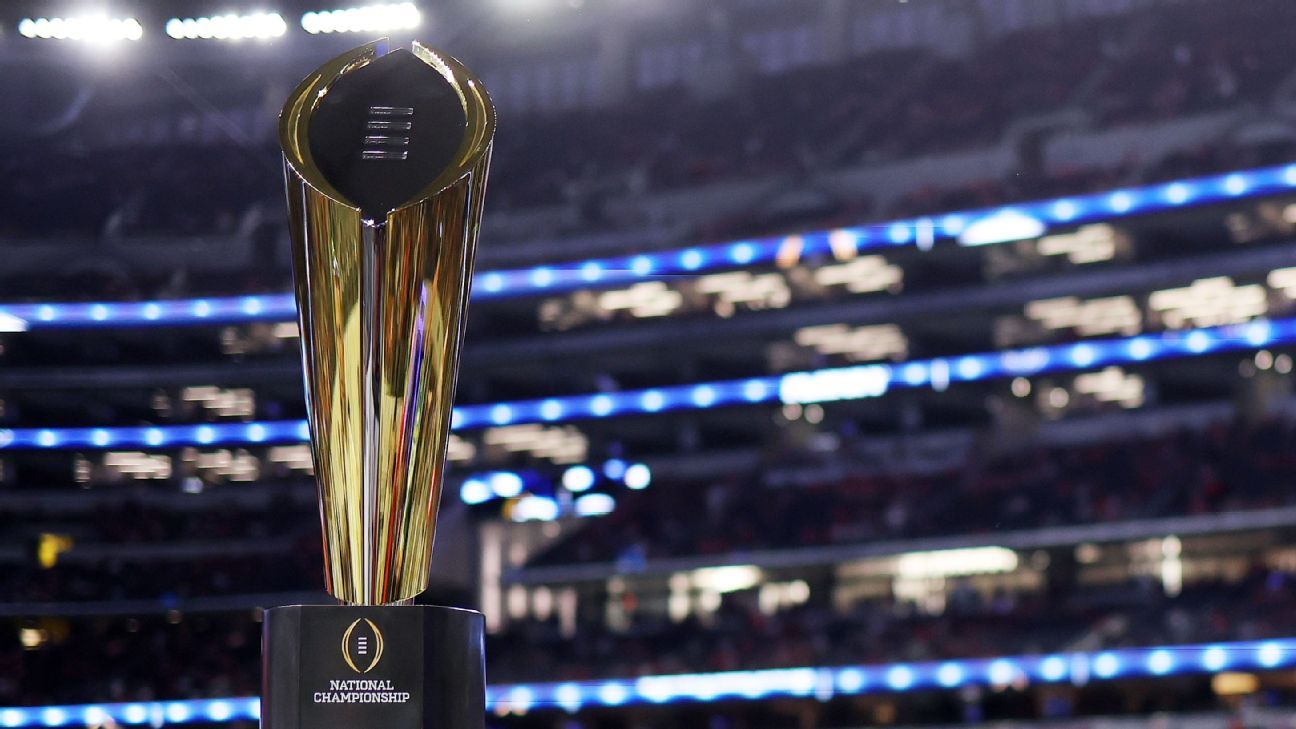
As the 2025 season progresses, the committee’s final rankings will determine the exact matchups and seedings for the next round of the playoff. The championship game will be held at the venue designated for the 2025 College Football Playoff Championship, where the finalists will contend for the national title. The expanded playoff format represents a significant shift in college football’s postseason structure, and its impact will be felt across the sport as teams prepare for the new competitive landscape.
", "key_points": [ "ESPN published a hypothetical 24‑team College Football Playoff bracket using the CFP committee’s 2025 final rankings.", "The new format expands the playoff from 12 to 24 teams, allowing more programs to compete for the national title.", "Teams are matched in the opening round based on their final ranking order, with higher‑ranked teams facing lower‑ranked opponents.", "The expansion aims to increase fan engagement, revenue, and competitive fairness in