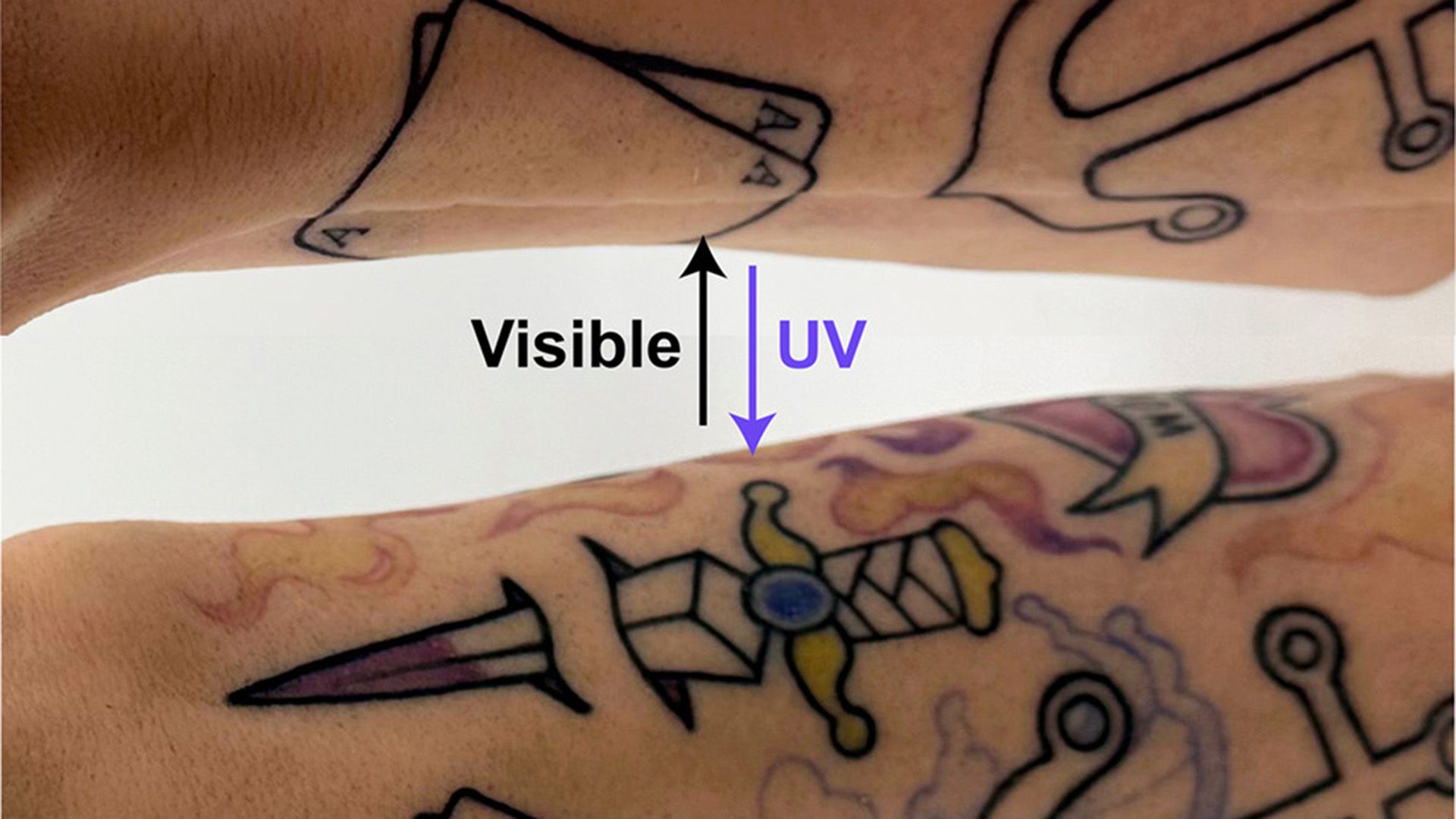
Tattoos could be turned on and off with light

- New tattoo ink can be activated or deactivated by light, allowing designs to become visible or invisible on demand.
- The technology addresses the major limitation of traditional tattoos, which are permanently visible and cannot be hidden.
- The development, reported by New Scientist, could enable dynamic fashion, medical applications, and greater personal control over body art.
- Further studies are needed to evaluate safety, durability, and practical application before commercial availability.
Scientists have announced a new type of tattoo ink that can be turned on and off with light, potentially resolving one of the biggest drawbacks of permanent body art: the lack of invisibility.
Traditional tattoos rely on pigments that remain in the skin indefinitely, making it impossible to hide or alter them without removal. The New Scientist report notes that the novel ink incorporates light-sensitive molecules that change their optical properties when exposed to specific wavelengths, allowing the tattoo to become visible or invisible on demand.
Such a development could broaden the appeal of tattoos across a range of sectors. For fashion, it offers the possibility of dynamic designs that change with the wearer’s mood or surroundings. In medical contexts, clinicians could use temporary markings to guide procedures or monitor healing without permanent scarring. Moreover, the ability to switch visibility could reduce the social stigma associated with certain body art, giving people more control over how they present themselves.
While the concept is promising, further research is required to assess the long‑term safety of the light‑responsive compounds, their stability in the skin, and how they interact with natural skin processes. If these challenges can be overcome, the technology could lead to a new category of reversible tattoos that combine the permanence of ink with the flexibility of temporary markings.