Ancient Greeks Built a Harbor on Top of a Fault Line. It Didn’t End Well
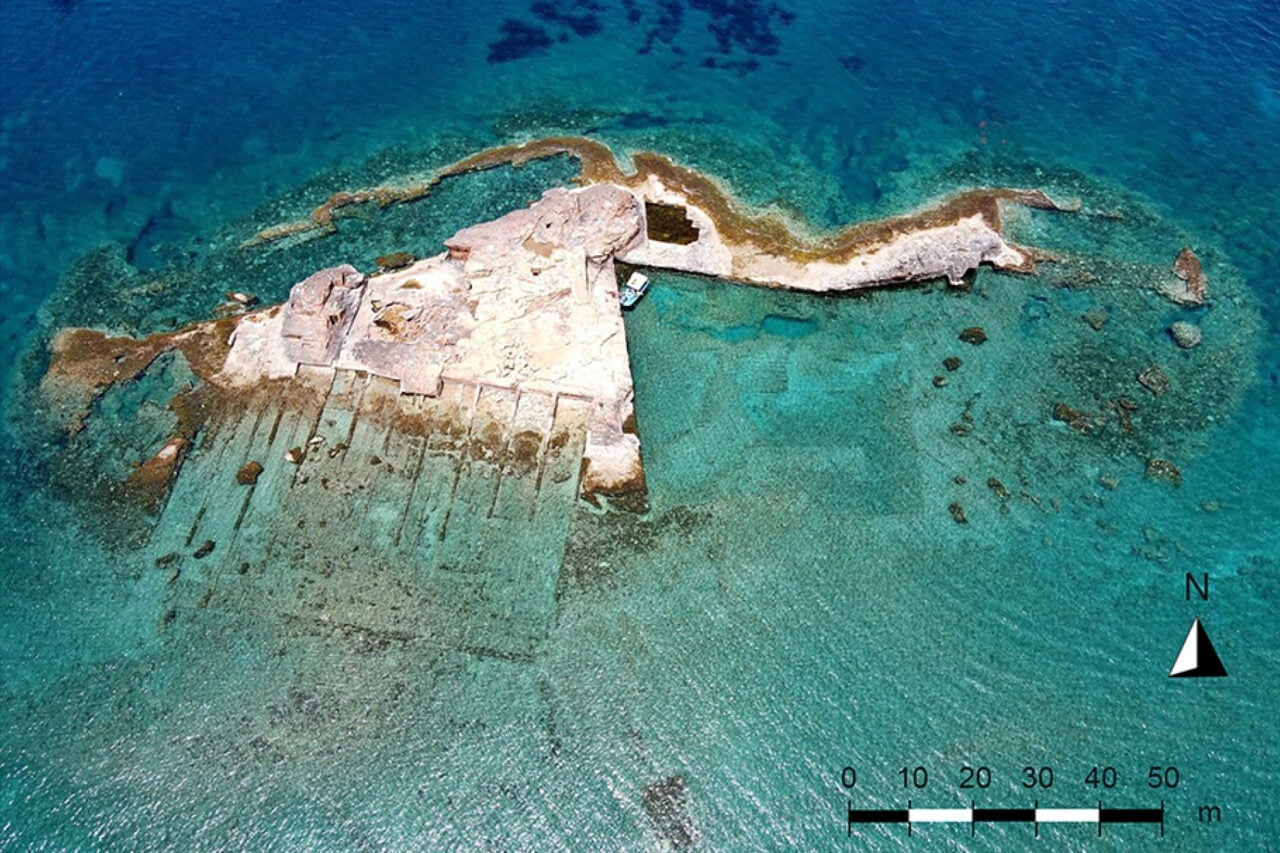
- Ancient Greeks carved a coastline to build a harbor for economic and military purposes.
- The harbor was constructed on an active fault network, leading to its eventual failure.
- The project illustrates the challenges of building on geologically unstable ground.
- The story highlights the need for seismic assessment in modern coastal engineering.
- Source: Gizmodo, technology category.
Ancient Greeks carved a coastline to create a harbor that later proved to be built on an active fault line. According to a Gizmodo article, the Greeks engineered a strategic maritime facility by reshaping the shoreline, a move that served both economic trade and military defense objectives. The project is highlighted as an impressive example of classical engineering, showcasing the Greeks’ ability to manipulate natural landscapes for human purposes.
The harbor’s construction involved significant earthmoving and stonework to create a protected basin suitable for docking ships. The design accommodated the needs of a growing economy, enabling efficient transport of goods and facilitating naval operations in the Aegean Sea. By altering the coastal geometry, the Greeks could control access to their harbor, enhancing security against potential invaders while promoting commercial activity.
However, the choice of site had unforeseen consequences. The harbor was situated atop a network of active faults, a geological reality that was not fully understood at the time. Over the centuries, seismic activity along these faults eventually destabilized the structure. The resulting ground movements compromised the harbor’s integrity, leading to its decline and eventual abandonment. This outcome underscores the risks of constructing critical infrastructure on geologically unstable ground, even in antiquity.
Today, the story serves as a cautionary tale for modern engineers and planners. While the Greeks achieved remarkable feats with limited technology, their experience illustrates the importance of incorporating geological assessments into large‑scale construction projects. Future coastal developments can benefit from advanced seismic monitoring and risk mitigation strategies, ensuring that engineering ingenuity does not come at the expense of long‑term stability.